PLA vs. PETG vs. ASA vs. TPU: 2026 Heat Warp, Layer Strength & Fit Benchmark Study
Picking the wrong plastic can crack a snap-fit lid on first assembly or melt a car phone mount in a single afternoon. We compiled thermal deflection (HDT), Z-axis layer adhesion, 0.4mm nozzle clearance offsets, and real part-cost benchmarks across PLA, PETG, ASA, and TPU so you can pick the right spool every time.
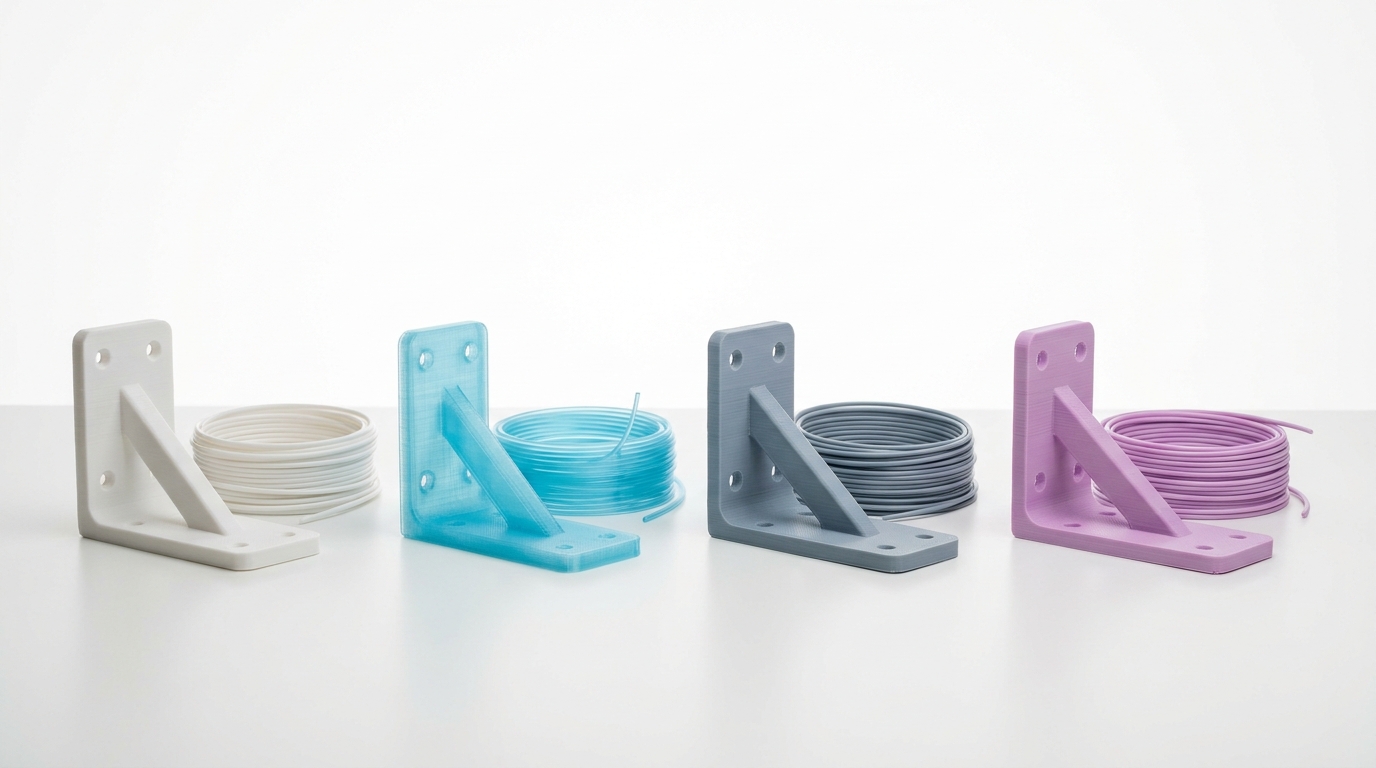
Test These Filaments on Real 3D Printable Parts
PLA / PETG: Battery & SD Trays
Use PLA for indoor desk drawers or PETG for 18650 lithium cells and warm garage tool chests (+0.4mm pocket gap).
PETG: Snap-Fit Electronics Boxes
PETG flexes smoothly without snapping so click-shut lids survive dozens of openings (0.25mm clip clearance).
ASA / PETG: Outdoor Garden Stakes
ASA resists 90°C summer sun and UV fading so raised plant labels stay crisp across multiple growing seasons.
Dataset 1: Thermal Deflection (HDT), Layer Adhesion & Environmental Limits
Benchmarked across standard unannealed 1.75mm consumer spools printed with a 0.4mm brass/hardened nozzle at 0.20mm layer height and 4 perimeter walls.
| Filament | Heat Deflection (HDT @ 0.45 MPa) | Z-Axis Layer Bond | Hot Car / Summer Sun Survival | Printer Requirement | Primary Failure Mode |
|---|---|---|---|---|---|
| PLA / PLA+ | 55 – 60 °C (131–140°F) |
Moderate (Rigid) | Fails (sags in minutes) | Open printer (no enclosure) | Brittle snap along layer lines or heat sag |
| PETG | 68 – 75 °C (154–167°F) |
Very High (Cohesive) | Shaded outdoor OK; hot dash sags | Open printer (dry spool recommended) | Stringing if damp; bends before snapping |
| ASA | 85 – 95 °C (185–203°F) |
High (when enclosed) | Passes (UV & heat stable) | Heated enclosure + ventilation | Warping corners on open beds |
| TPU (95A) | 60 – 80 °C (load dependent) |
Maximum (Elastomeric) | Passes outdoor UV & flex | Direct-drive extruder | Compresses/squishes under heavy static weight |
Dataset 2: Verified 0.4mm Nozzle Shrinkage & Fit Clearances by Material
Different plastics shrink at different rates as they cool from nozzle temperature to the build plate. Apply these verified millimeter clearances in 3D PrintHaus customizers for first-try fits.
| Filament | Typical XY Shrinkage | Recommended Snap-Lid Gap | Cylindrical Battery / Peg Slip Fit | Typical Nozzle / Bed Temps |
|---|---|---|---|---|
| PLA / PLA+ | 0.2% – 0.3% |
0.30 mm (stiff snap) |
+0.40 mm (AA / AAA / SD) |
210°C nozzle / 60°C bed |
| PETG | 0.3% – 0.5% |
0.25 mm (flexible click) |
+0.40 mm (18650 / Skadis hooks) |
245°C nozzle / 75°C bed |
| ASA | 0.4% – 0.7% |
0.35 mm (+0.4% scale) |
+0.50 mm (compensates shrink) |
260°C nozzle / 100°C bed |
| TPU (95A) | 0.3% – 0.6% |
0.15 mm (stretch press-fit) |
+0.20 mm (snug cable grommet) |
225°C nozzle / 50°C bed |
Dataset 3: Real-World Part Weight, Speed & Material Cost Comparison
| 3D PrintHaus Part | Best Plastic Choice | Volumetric Flow Rate | Part Weight & Time | Spool Cost per Part |
|---|---|---|---|---|
| 2×3 Gridfinity Drawer Bin | PLA ($18.50/kg) | 24 mm³/s |
48 g • 1h 24m |
$0.89 |
| 12-Slot AA Battery Tray | PLA ($18.50/kg) | 24 mm³/s |
32 g • 48 min |
$0.59 |
| ESP32 Snap-Fit Sensor Box | PETG ($21.00/kg) | 16 mm³/s |
32 g • 1h 05m |
$0.67 |
| 60mm Gusseted Shelf L-Bracket | PETG ($21.00/kg) | 16 mm³/s |
25 g • 48 min |
$0.53 |
| Raised-Letter Garden Stake (120mm) | ASA ($26.00/kg) | 18 mm³/s |
12 g • 26 min |
$0.31 |
Cite This Study
Frequently Asked Questions
At what temperature does 3D printed PLA warp compared to PETG and ASA?
Standard PLA begins to soften and sag under light load around 55 to 60 degrees C (131 to 140 F)—which is easily exceeded inside a parked car or sunlit window. PETG holds shape up to 68 to 75 degrees C, while ASA survives 85 to 95 degrees C in direct outdoor sun.
Which filament has the strongest Z-axis layer adhesion for hooks and snap-fit boxes?
PETG and TPU deliver the strongest Z-axis interlayer bonding among consumer filaments. Under stress, PETG flexes slightly and fuses across layers instead of snapping cleanly along a layer line like rigid PLA.
Do I need different fit clearances when printing with PLA versus PETG or ASA?
Yes. For 0.4mm nozzles, we recommend 0.30mm snap-fit clearance in rigid PLA, 0.25mm in slightly flexible PETG, and 0.35mm plus 0.4% XY scale compensation in ASA to offset thermal shrinkage.
Can I print TPU 95A on a standard Bowden tube 3D printer?
Flexible 95A TPU prints much more reliably on a direct-drive extruder at slow speeds (30 to 50 mm/s) with retraction turned down. Long Bowden tubes let soft filament buckle inside the tube and cause jams.